 Call Us : 08045812334 Call Us : 08045812334
 Get A Quote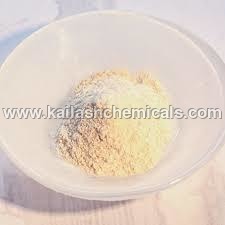
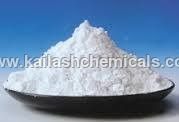
Pectin Additives
1500 INR/Kilograms
Product Details:
- Water Solubility Yes
- Type Flavoring Agents
- Color White, Yellow
- Purity 99%
- Application Industrial
- Storage Room Temperature
- Click to View more
X
Pectin Additives Price And Quantity
- 10000 Unit
- 1500 INR/Kilograms
Pectin Additives Product Specifications
- Flavoring Agents
- Room Temperature
- Industrial
- Yes
- 99%
- White, Yellow
Pectin Additives Trade Information
- 10 Unit Per Day
- 2-3 Days
- All India
Product Description
The main use for pectin (vegetable agglutinate) is as a gelling agent, thickening agent and stabilizer in food. The classical application is giving the jelly-like consistency to jams or marmalades, which would otherwise be sweet juices. Pectin also reduces syneresis in jams and marmalades and increases the gel strength of low calorie jams. For household use, pectin is an ingredient in gelling sugar (also known as "jam sugar") where it is diluted to the right concentration with sugar and some citric acid to adjust pH. In some countries, pectin is also available as a solution or an extract, or as a blended powder, for home jam making. For conventional jams and marmalades that contain above 60% sugar and soluble fruit solids, high-ester pectins are used. With low-ester pectins and amidated pectins less sugar is needed, so that diet products can be made.
Pectin is used in confectionery jellies to give a good gel structure, a clean bite and to confer a good flavour release. Pectin can also be used to stabilize acidic protein drinks, such as drinking yogurt, to improve the mouth-feel and the pulp stability in juice based drinks and as a fat substitute in baked goods.[15] Typical levels of pectin used as a food additive are between 0.5 and 1.0% this is about the same amount of pectin as in fresh fruit.[16]
In medicine, pectin increases viscosity and volume of stool so that it is used against constipation and diarrhea. Until 2002, it was one of the main ingredients used in Kaopectate a medication to combat diarrhea, along with kaolinite. It has been used in gentle heavy metal removal from biological systems.[17] Pectin is also used in throat lozenges as a demulcent.
In cosmetic products, pectin acts as stabilizer. Pectin is also used in wound healing preparations and specialty medical adhesives, such as colostomy devices.
Sriamornsak[18] revealed that pectin could be used in various oral drug delivery platforms, e.g., controlled release systems, gastro-retentive systems, colon-specific delivery systems and mucoadhesive delivery systems, according to its intoxicity and low cost. It was found that pectin from different sources provides different gelling abilities, due to variations in molecular size and chemical composition. Like other natural polymers, a major problem with pectin is inconsistency in reproducibility between samples, which may result in poor reproducibility in drug delivery characteristics.
In ruminant nutrition, depending on the extent of lignification of the cell wall, pectin is up to 90% digestible by bacterial enzymes. Ruminant nutritionists recommend that the digestibility and energy concentration in forages can be improved by increasing pectin concentration in the forage.
| Usage/Application | industrial |
| Form | Powder |
| Physical State | Powder |
| Usage | Industrial |
| Shelf Life | 1Years |
| Country of Origin | Made in India |
Exceptional Versatility and Purity
Our pectin additives ensure superior performance in both industrial and food applications due to their remarkably high purity levels of 95% and 99%. Available in white and yellow colors, these powders are well-suited for a range of flavoring requirements, meeting stringent industry standards for safety and effectiveness.
Safe and Convenient Use
Pectin is completely non-poisonous and designed for ease of handling and storage. Its water-soluble nature enables it to integrate smoothly into processes, while its 2-year shelf life and room temperature storage needs make it a practical choice for diverse operational environments.
FAQ's of Pectin Additives:
Q: How should I store pectin additives to maintain their quality?
A: Store pectin additives at room temperature in a dry, sealed container to preserve their efficacy and extend their 2-year shelf life.Q: What are the main industrial and food applications for these pectin powders?
A: Pectin powders serve primarily as flavoring, thickening, and gelling agents in the food industry, and are also used in various industrial processes requiring stabilization and texture enhancement.Q: When is it appropriate to use the 99% purity pectin over the 95% variant?
A: Use the 99% purity pectin when a higher level of gelling strength or purity is desirable, such as in applications demanding minimal impurities for food safety or high-performance industrial needs.Q: Where is your pectin additive supplied and distributed?
A: Our pectin additives are supplied, distributed, and traded throughout India, catering to diverse industrial and food production sectors.Q: What is the process for using pectin powder in production?
A: Simply dissolve the required amount of pectin powder in water or the liquid phase of your mixture, ensuring even dispersion for optimal thickening, stabilizing, or flavoring results.Q: What are the benefits of using these high-purity pectin additives?
A: Benefits include enhanced product consistency, reliable texture control, improved flavor profile, long shelf life, non-toxicity, and ease of storage and use.Tell us about your requirement

Price:
Quantity
Select Unit
- 50
- 100
- 200
- 250
- 500
- 1000+
Additional detail
Mobile number
Email

Other Products in 'FOOD AND FOOD ADDITIVES' category

Sonipat, Haryana

- 582,, HSIIDC Industrial Area, Rai, Sonipat - 131029, Haryana, India
- Phone : 08045812334


 Send Inquiry
- Mr Naveen Jain (Director)
- Mobile :08045812334
- KAILASH CHEMICALS
(A UNIT OF SHANTI FOOD INDUSTRIES)
Marketing Office : 46 Phase -II Second Floor, Badli Industrial Estate Badli, Delhi-110042
Head Office Address : 582, Food Park HSIIDC Industrial Area Rai, Haryana - 131029


 Send Inquiry
 Send SMS
|

SHANTI FOOD INDUSTRIES
All Rights Reserved.(Terms of Use)
Developed and Managed by Infocom Network Private Limited.
Developed and Managed by Infocom Network Private Limited.

