 Call Us : 08045812334 Call Us : 08045812334
 Get A Quote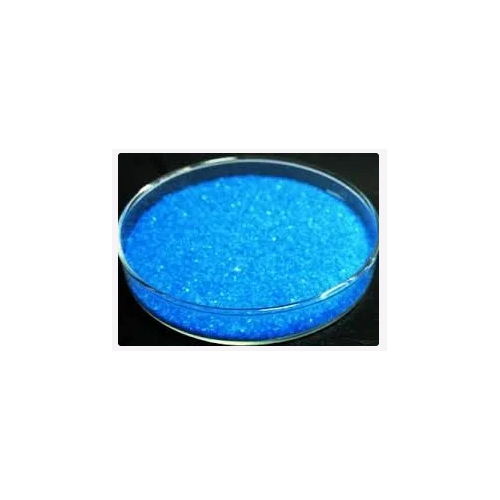
Copper Sulfate
150 INR/Kilograms
Product Details:
- Ph Level Acidic (3.7 - 4.5, 5% solution)
- Grade Technical / Industrial
- Density 2.284 Gram per cubic centimeter(g/cm3)
- EINECS No 231-847-6
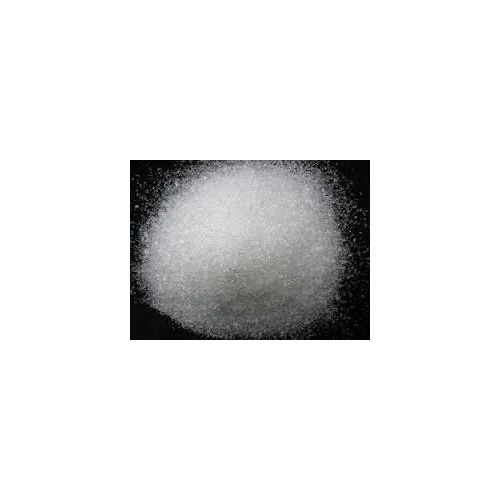
- Appearance Bluish Crystalline / Powder
- Properties Blue crystalline solid, easily soluble in water, efflorescent in dry air, toxic if ingested, strong oxidizing agent
- Solubility In water: 22 g/100 ml (20C), 320 g/L (cold), very soluble in boiling water
- Click to View more
X
Copper Sulfate Price And Quantity
- 10000 Unit
- 150 INR/Kilograms
Copper Sulfate Product Specifications
- Used as a fungicide, algicide, root killer, and analytical reagent
- High
- YES
- Industrial
- 2 Years
- 1.514
- Metallic, astringent, bitter
- Room Temperature
- CuSO5HO
- 7758-99-8
- Bluish Crystalline / Powder
- Blue crystalline solid, easily soluble in water, efflorescent in dry air, toxic if ingested, strong oxidizing agent
- In water: 22 g/100 ml (20C), 320 g/L (cold), very soluble in boiling water
- Acidic (3.7 - 4.5, 5% solution)
- Technical / Industrial
- 2.284 Gram per cubic centimeter(g/cm3)
- 231-847-6
- Odorless
- 28332500
- Powder
- 110C (decomposes)
- Copper Sulfate
- 249.68 g/mol
- CuSO45H2O
- Crystal / Granular
- Cupric Sulfate Pentahydrate
- Not applicable (decomposes before boiling)
- III
- Non-flammable
- Toxic to aquatic life
- 9 (Miscellaneous dangerous substances and articles)
- 3.7 to 4.2
- Copper(II) sulfate pentahydrate
- Stable under ordinary conditions
- Strong reducing agents, metals, alkalis
- UN 3077
Copper Sulfate Trade Information
- 100 Unit Per Day
- 2-3 Days
Product Description
| Grade Standard | Bio-Tech Grade |
| Country of Origin | Made in India |
| Grade | Industrial |
| Packaging Size | 5 kg |
| Form | Powder |
| Purity | 100% |
Copper (II) sulfate, also known as cupric sulfate or copper sulphate, is the inorganic compound with the chemical formulaCuSO4
UsesAs a herbicide, fungicide and pesticide
Copper sulfate pentahydrate is a fungicide. However, some fungi are capable of adapting to elevated levels of copper ions. Mixed with lime it is called Bordeaux mixture and used to control fungus on grapes, melons, and other berries
Broad Industrial Applications
Copper Sulfate serves multiple industrial roles, such as fungicide, algicide, root killer, and for laboratory analysis. Its versatile chemical properties contribute to effective control of fungal and algal growth in water bodies, as well as use in chemical synthesis. Distributors, suppliers, and traders across India provide this technical/industrial grade product for various sectors.
Safe Handling and Storage
Given its toxicity and corrosive acidic pH, Copper Sulfate should be stored at room temperature in sealed containers away from strong reducing agents, metals, and alkalis. Use proper protective equipment when handling to avoid accidental ingestion or environmental contamination. The stable, odorless, bluish crystalline powder must not be allowed to contact potable water supplies or be released into natural waterways.
FAQ's of Copper Sulfate:
Q: How should Copper Sulfate be safely stored and handled?
A: Copper Sulfate should be stored in a dry, cool place at room temperature in tightly sealed containers. Always use appropriate protective gear, and avoid contact with strong reducing agents, metals, and alkalis. Ensure it is kept away from food and water sources to prevent accidental ingestion or environmental release.Q: What are the main industrial uses of Copper Sulfate?
A: Copper Sulfate is primarily used as a fungicide in agriculture, an algicide in water treatment, a root killer, and as an analytical reagent in laboratories. Its strong oxidizing ability and high solubility make it effective for these purposes.Q: When does Copper Sulfate decompose, and why doesn't it have a boiling point?
A: Copper Sulfate does not have a boiling point because it decomposes before reaching its boiling temperature. It decomposes at around 110C, breaking down into other substances rather than boiling as a liquid.Q: Where should Copper Sulfate not be used or disposed of?
A: Copper Sulfate must never be disposed of in natural waterways or near potable water sources as it is toxic to aquatic life. Always follow local regulations and guidelines for disposal to minimize environmental impact.Q: What benefits does Copper Sulfate offer in water treatment and agriculture?
A: Copper Sulfate is highly effective in controlling algae in water treatment and fungal diseases in agriculture, promoting healthier crops and cleaner water systems. Its rapid solubility ensures quick action during application processes.Q: Which process is recommended for the application of Copper Sulfate as a fungicide?
A: Dissolve the appropriate amount of Copper Sulfate in water to create a solution matching the required concentration, then apply it evenly over the affected area as specified by product guidelines. Always wear protective equipment to avoid exposure.Q: What makes Copper Sulfate hazardous, and how is it classified during transport?
A: Copper Sulfate is hazardous due to its toxicity and potential environmental harm. It is classified under UN 3077, Hazard Class 9 (miscellaneous dangerous substances), and Packing Group III when being transported.Tell us about your requirement

Price:
Quantity
Select Unit
- 50
- 100
- 200
- 250
- 500
- 1000+
Additional detail
Mobile number
Email

Other Products in 'INORGANIC CHEMICALS' category

Sonipat, Haryana

- 582,, HSIIDC Industrial Area, Rai, Sonipat - 131029, Haryana, India
- Phone : 08045812334


 Send Inquiry
- Mr Naveen Jain (Director)
- Mobile :08045812334
- KAILASH CHEMICALS
(A UNIT OF SHANTI FOOD INDUSTRIES)
Marketing Office : 46 Phase -II Second Floor, Badli Industrial Estate Badli, Delhi-110042
Head Office Address : 582, Food Park HSIIDC Industrial Area Rai, Haryana - 131029


 Send Inquiry
 Send SMS
 Call Me Free
|

SHANTI FOOD INDUSTRIES
All Rights Reserved.(Terms of Use)
Developed and Managed by Infocom Network Private Limited.
Developed and Managed by Infocom Network Private Limited.

